Accret
Blink to Transact, Bridge Across Chain.
Overview
A self-custodial Crypto wallet designed to make blockchain interactions feel as natural as checking your bank app.
| Client | Accret |
| Industry | Crypto, De-Fi |
| Platform | iOS app · Android app · Solana Seeker · marketing website |
| Scope | UX Research · Branding · Product Design · Web/App Development |

About the Product
Accret
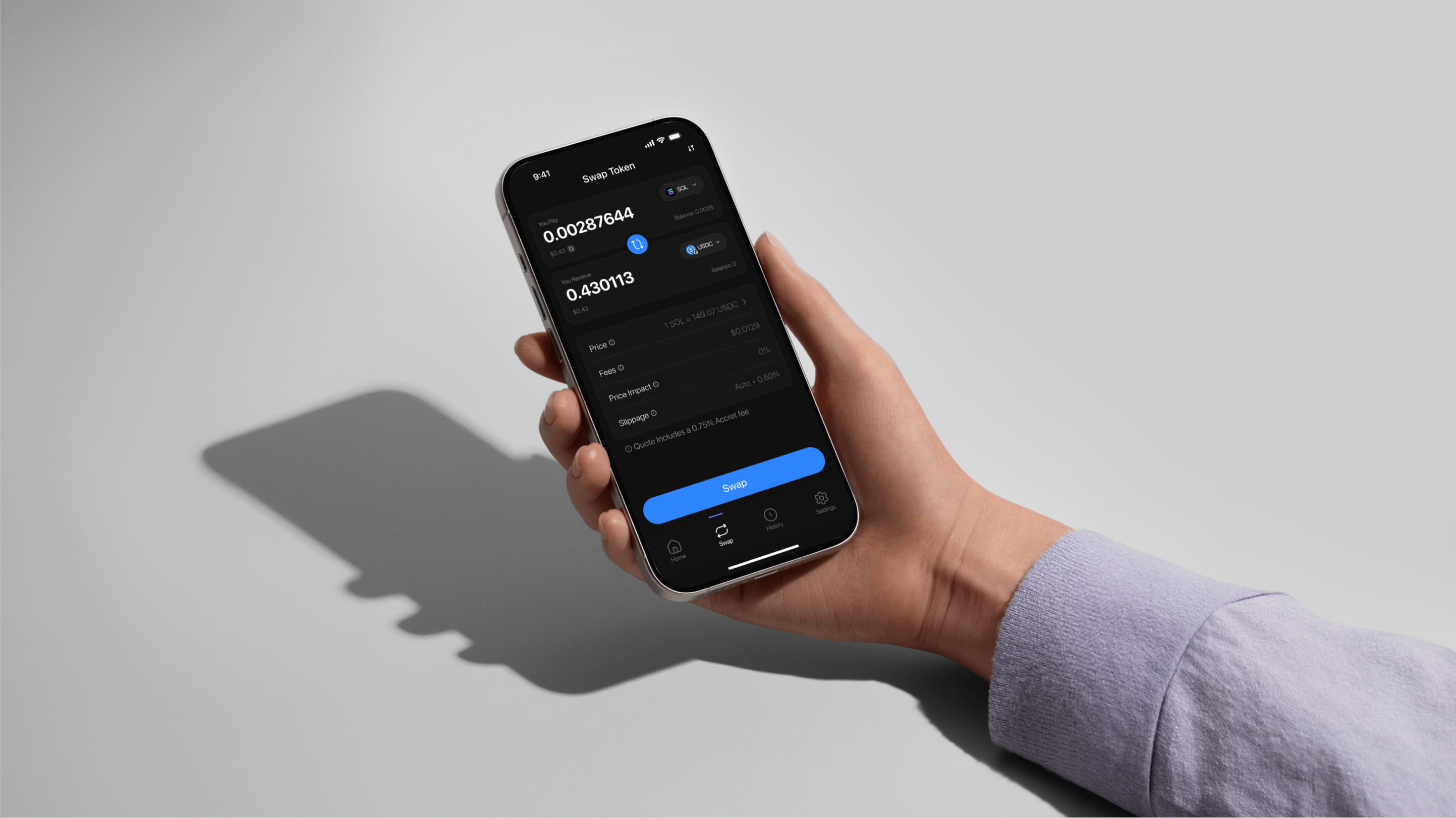
Accret is a self-custodial crypto wallet that provides native support for Blinks and bridges without friction. The project covered the complete product design process, from research and branding through to product design for both the mobile app and marketing website.
The project started as a Solana App Clips integration - a lightweight, instant-access entry point into the wallet. From there, it evolved into a full product.
The scope covered every layer of product design - from the first user research session to the last pixel on a printed t-shirt.
The Problem
Web3 wallets are the front door to an entire ecosystem.
- Most users never make it past onboarding
35% of wallet users never back up their seed phrase. Retention drops below 10% after 30 days. The onboarding experience of most wallets requires prior crypto knowledge that mainstream users don't have.
- 2.3–3.7M Bitcoin permanently lost due to forgotten seed phrases and passwords ~ Ledger, 2025
- Complexity is treated as a feature, not a problem
Gas fees, chain switching, transaction signing, these are presented as technical details the user should learn, not as design problems the product should solve. Existing wallets expose blockchain plumbing instead of abstracting it.
- Every interaction carries irreversible consequences
Unlike banking apps, every interaction carries anxiety. Most wallet UIs don't acknowledge or design for this emotional reality.- $9.3B in crypto fraud losses in 2024 alone ~ FBI
Accret started from a simple question: what if a self-custodial wallet could feel as clear and trustworthy as a banking app without giving up the user's ownership of their keys?
Problem research
Research & Discovery
Insights gathered from industry patterns, competitors, and user expectations.
Before designing, we spent time understanding how crypto wallets are built, positioned, and perceived, and where the gaps are between what exists and what users actually need.
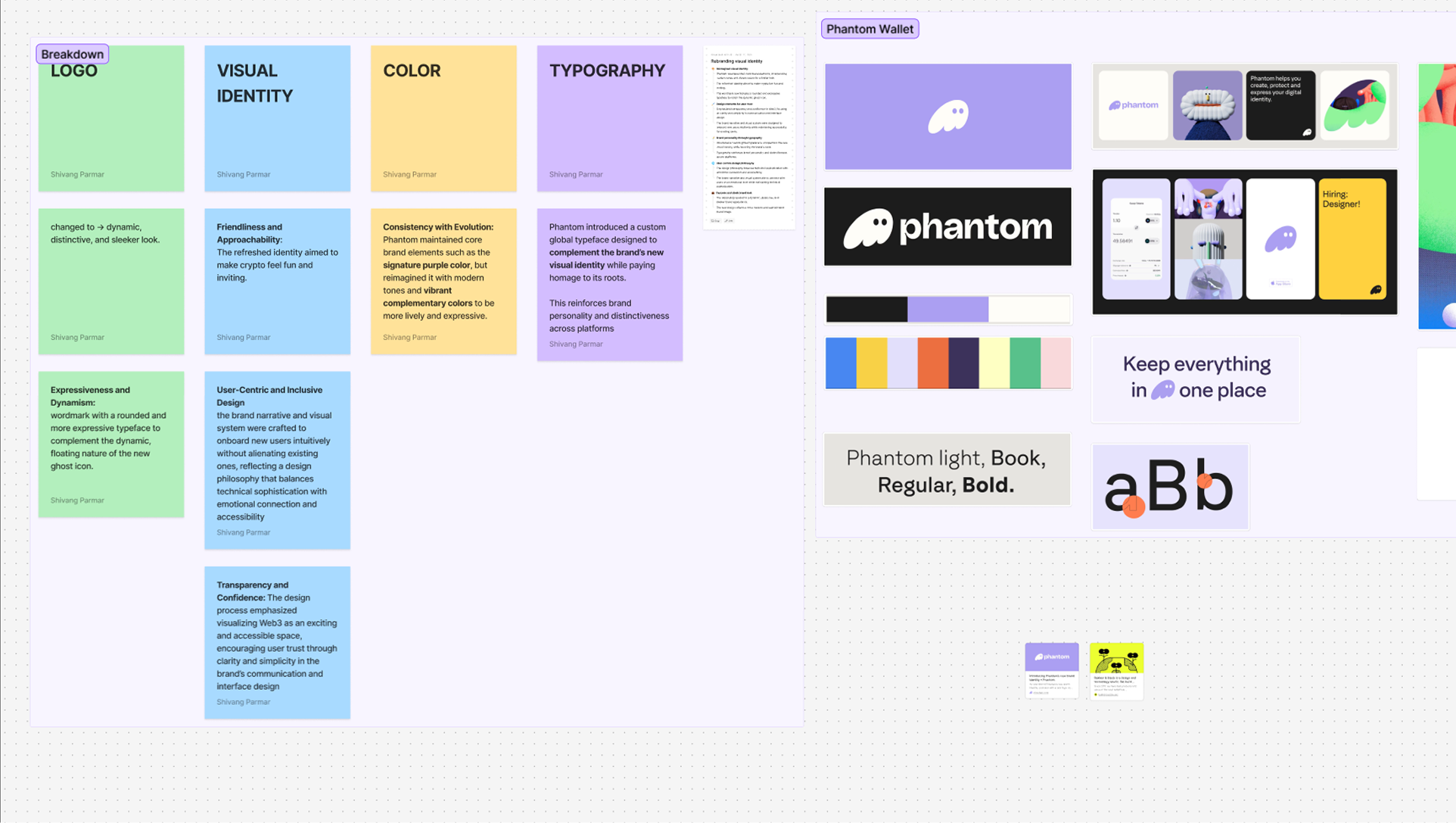
The research covered competitive analysis across the wallet ecosystem, a focused brand study on Phantom (the strongest wallet brand in Web3), audience segmentation, and stakeholder alignment on positioning.
Competitive analysis
From a user perspective, we researched across various established players in the market in order to build a cohesive branding across Accret.
Phantom
A deep-dive into the strongest wallet brand
As the wallet that most successfully crossed from crypto-native to mainstream appeal, Phantom's brand and UX decisions became our primary reference point for how a wallet should feel.
Three things carried directly into our design process:
- The dual-audience problem is real and unsolvable by choosing one side. We designed for newcomers as the default experience, with progressive disclosure for power users.
- When a product handles your money, the visual identity IS the trust signal. Phantom proved that a custom typeface and a mascot with personality outperform a generic logo and Inter font.
- Tone of voice matters as much as visual design.
Phantom App Research
Who we designed for
Crypto newcomers
First-time wallet users coming from traditional finance. They compare the experience to their banking app, not to MetaMask.
They need hand-holding through unfamiliar concepts (seed phrases, gas fees, network selection) and explicit reassurance at every high-stakes moment.
Primary fear: "If I make a mistake, I lose everything."
Primary need: Clarity, guidance, and confidence to act.
Experienced Web3 users
DeFi-active users who swap, bridge, and interact with dApps regularly. They evaluate wallets on execution speed, routing quality, and how much control they retain.
They want efficiency without unnecessary friction, but they also want to verify what they're signing.
Primary fear: "Is this transaction doing what I think it's doing?"
Primary need: Speed, transparency, and verification.
Design strategy & goals
Most crypto wallets focus heavily on functionality. But for many users, especially newcomers, the challenge starts much earlier:
understanding what is happening.
Research showed recurring friction points across crypto products:
- Complex onboarding
- Technical terminology
- Wallet setup and seed phrases
- Complex transaction flows
- Interfaces optimized for crypto-native users only
Branding & Visual Identity
Designing an identity around movement, accumulation, and connected ecosystems
Crypto wallets often follow a familiar visual language: glowing gradients, abstract futuristic symbols, and heavily technical aesthetics.
For Accret, the objective was different. The product needed to communicate trust and speed while remaining approachable for users entering Web3.
Since the wallet was built around cross-chain experiences powered by Wormhole, the brand identity needed to represent movement and connection rather than static storage.
The starting point came from the word Accret itself.
Accretion refers to growth through accumulation, where smaller elements gradually come together under gravitational influence to form something larger.
Logo & typography exploration
Building a cohesive visual system that reflects precision, reliability, and clarity.
The exploration process started with studying existing crypto identities, abstract marks, and typography systems. Multiple directions were tested across letterforms, symbols, and geometric structures to understand how a simple visual language could communicate complex ideas.
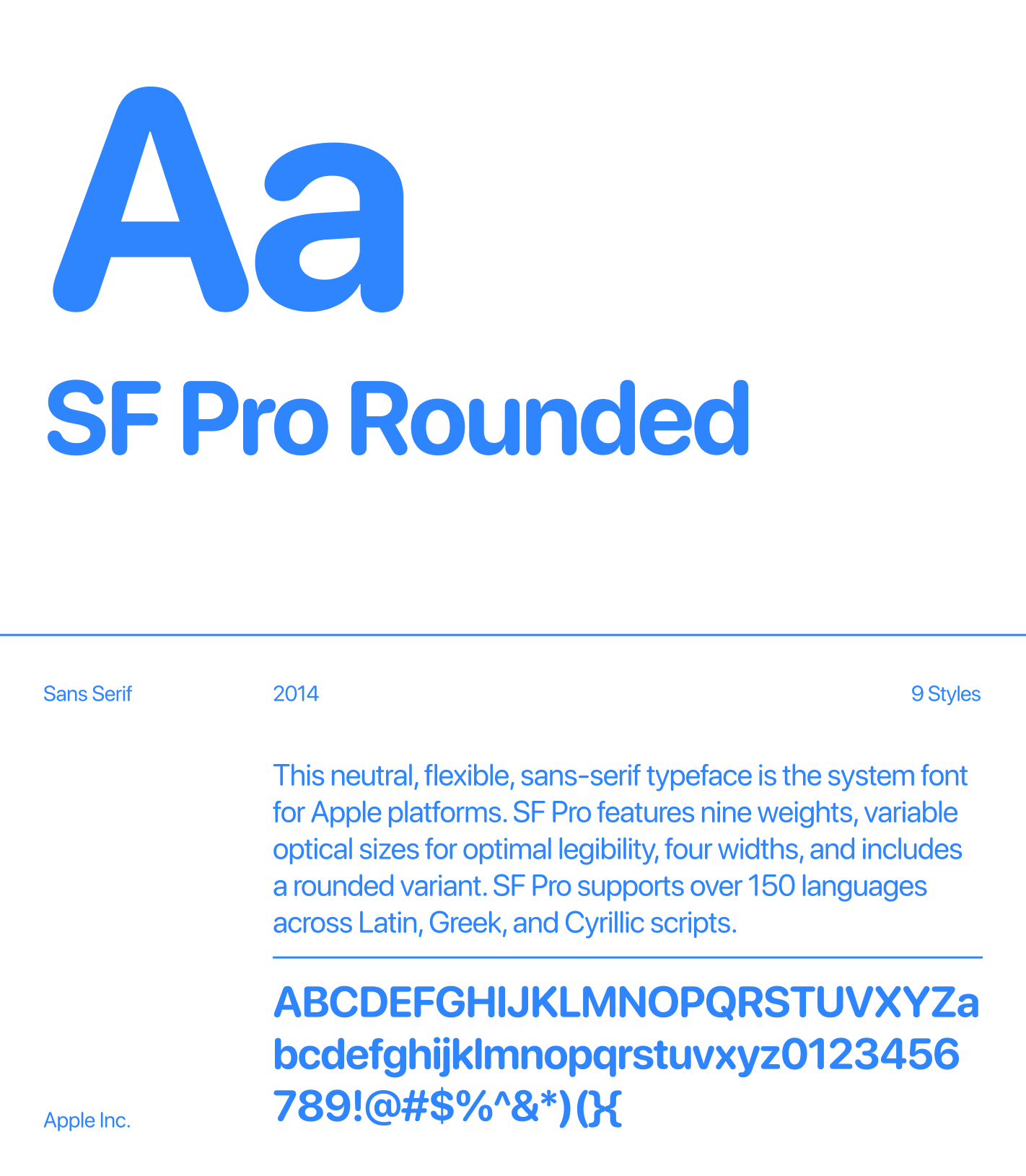
Typography played an equally important role. Since users constantly interact with balances, transactions, and system actions, the type needed to feel reliable and modern while still maintaining warmth.
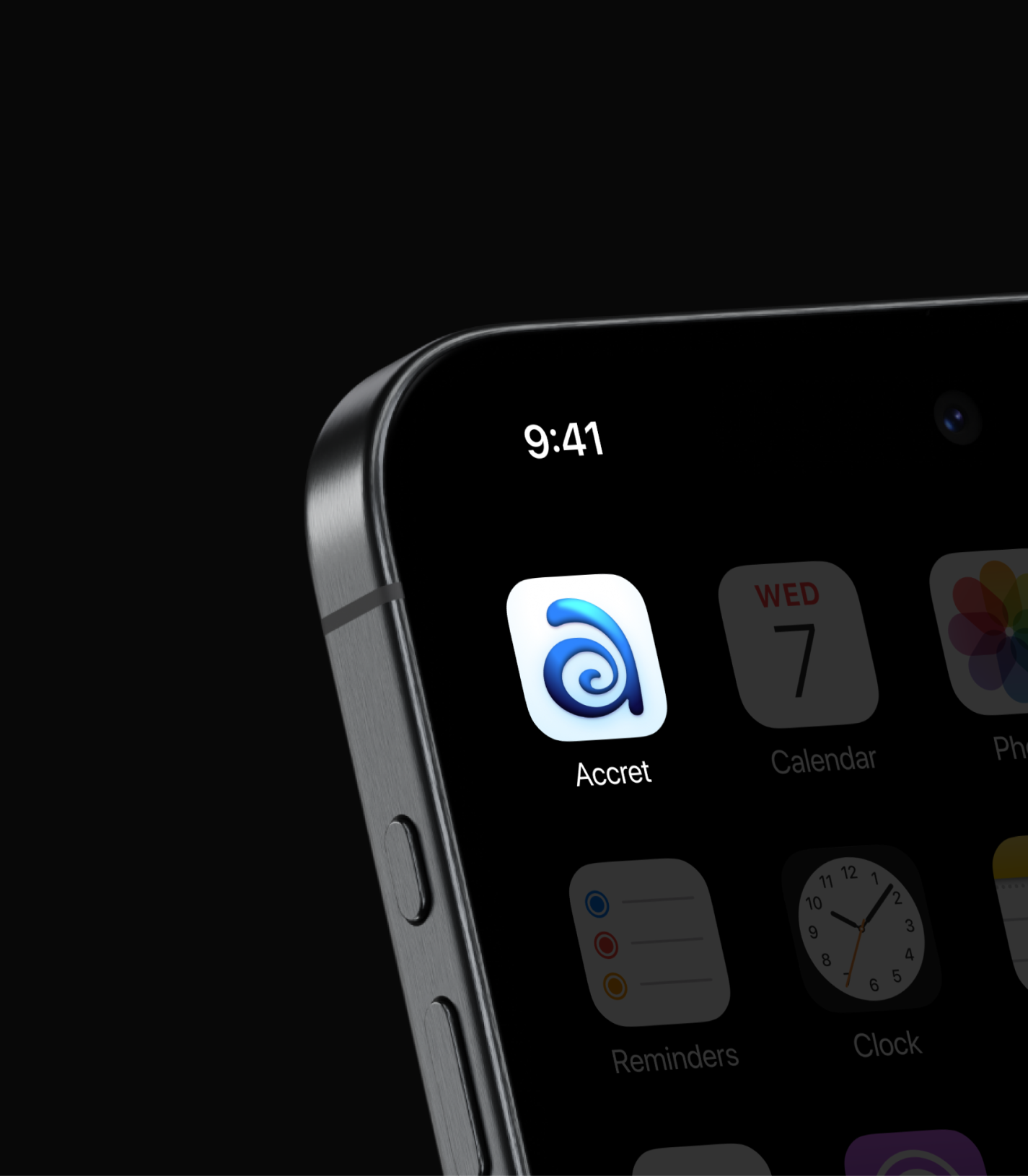
The final direction moved toward a spiral-inspired symbol representing movement, accumulation, and interconnected systems. The form intentionally feels active rather than static, almost suggesting gravitational pull and continuous expansion.
The spiral became a representation of multiple ideas simultaneously:
- Growth through accumulation
- Cross-chain flow
- Interoperability
- Continuous movement
- Connected ecosystems

Interface Design & Product Experience
After establishing the product structure and validating key journeys through wireframes, the next phase focused on turning those flows into a usable and trustworthy experience.
Each interface decision focused on reducing cognitive load, improving confidence during critical actions, and helping users navigate the product without feeling overwhelmed.
Onboarding & Wallet Setup
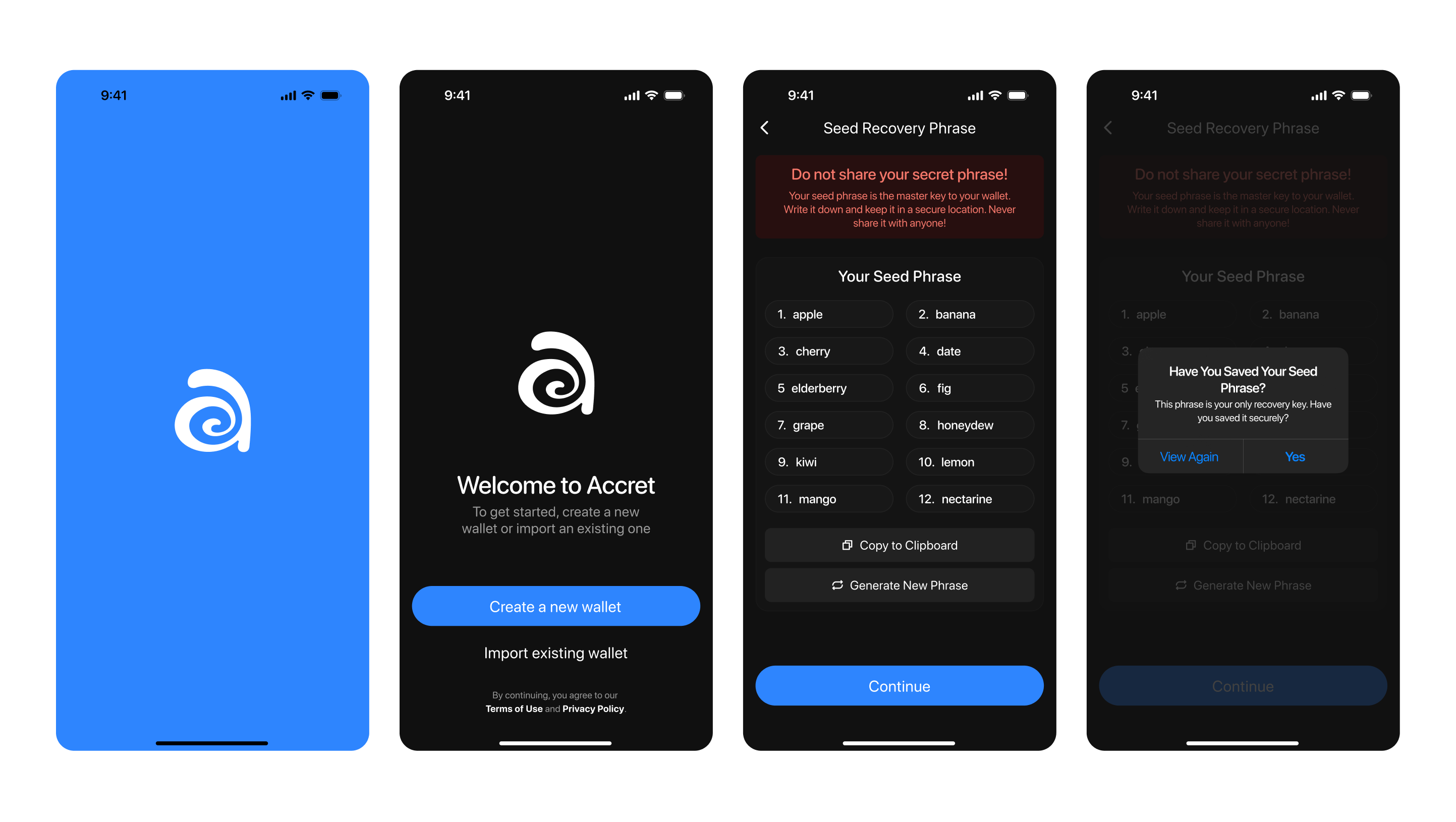
The onboarding experience became one of the most critical parts of the product. Research across existing wallets showed that users often form trust perceptions within their first few interactions.
The objective was to reduce complexity before introducing functionality.
Since Accret initially started through dedicated Solana App Clips experience and later expanded into a broader wallet ecosystem, the onboarding needed to feel quick and contextual rather than resembling a traditional setup process.
Home Dashboard & Portfolio
Wallet home screens often attempt to surface everything simultaneously: balances, charts, tokens, transactions, markets, and notifications. While feature-rich interfaces can appear powerful, they often create unnecessary cognitive load.
The Home Dashboard was designed as the operational center of the wallet, prioritizing clarity and actionability.
Key decisions included:
- Prominent total balance visibility
- Action-first layout for Send, Receive, Swap, and Buy
- Quick scanning of portfolio assets
- Account switching directly from the primary interface
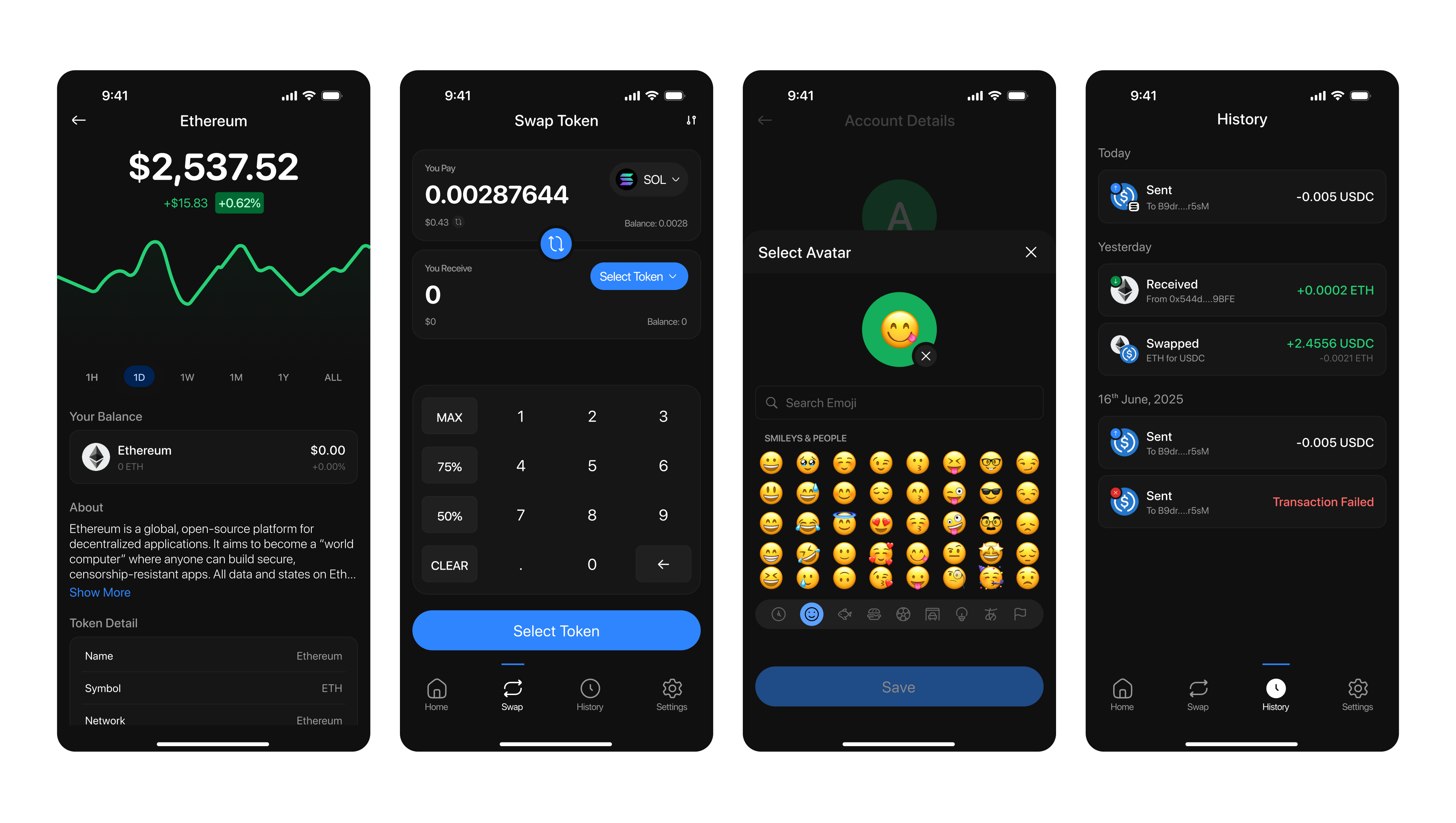
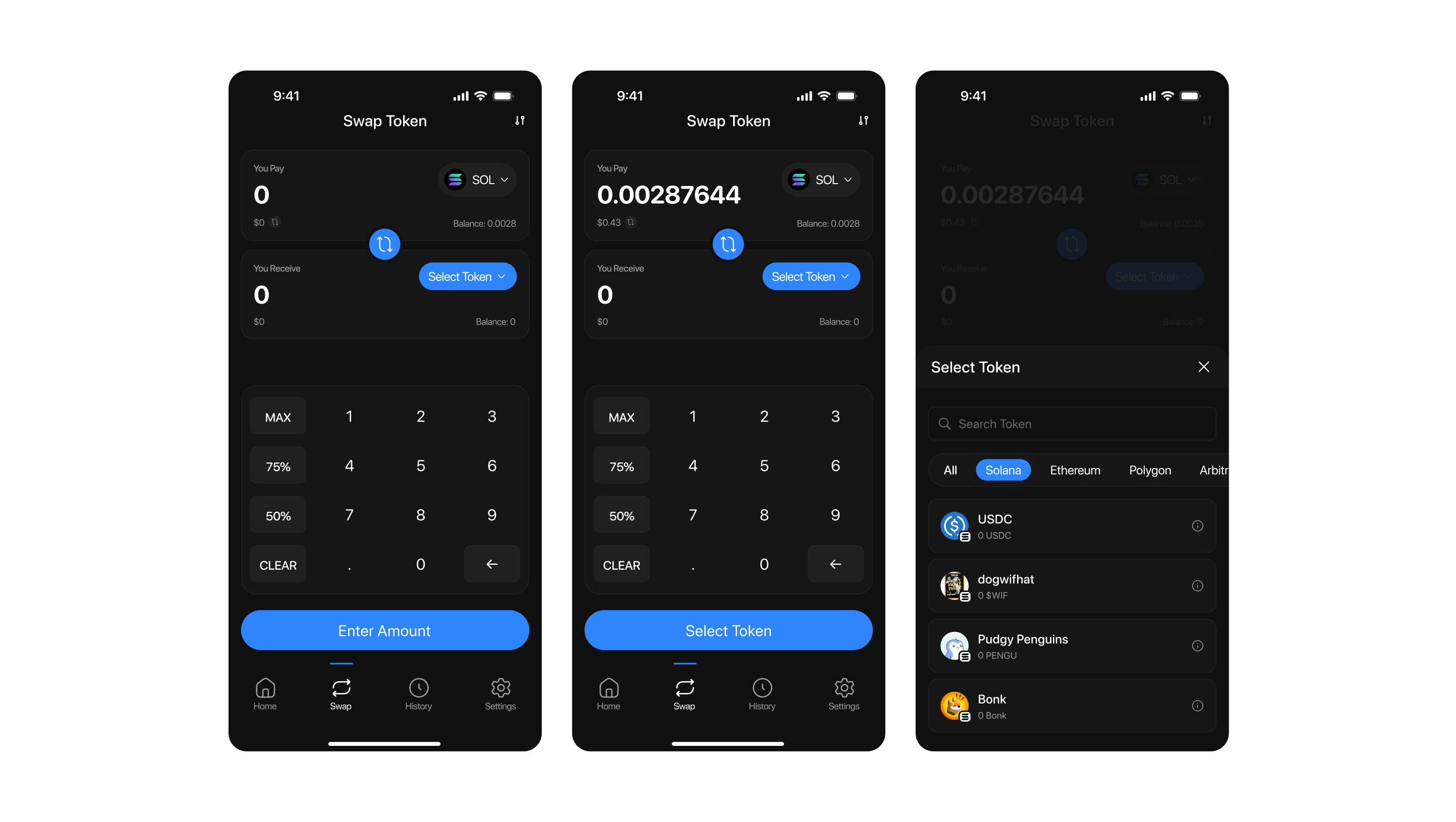
Token Details & Swap Experience
Crypto interactions become increasingly complex once users move beyond viewing balances and enter transaction-heavy experiences.
Actions like token swaps introduce multiple layers of information such as exchange rates, token selection, network interactions, and transaction previews.
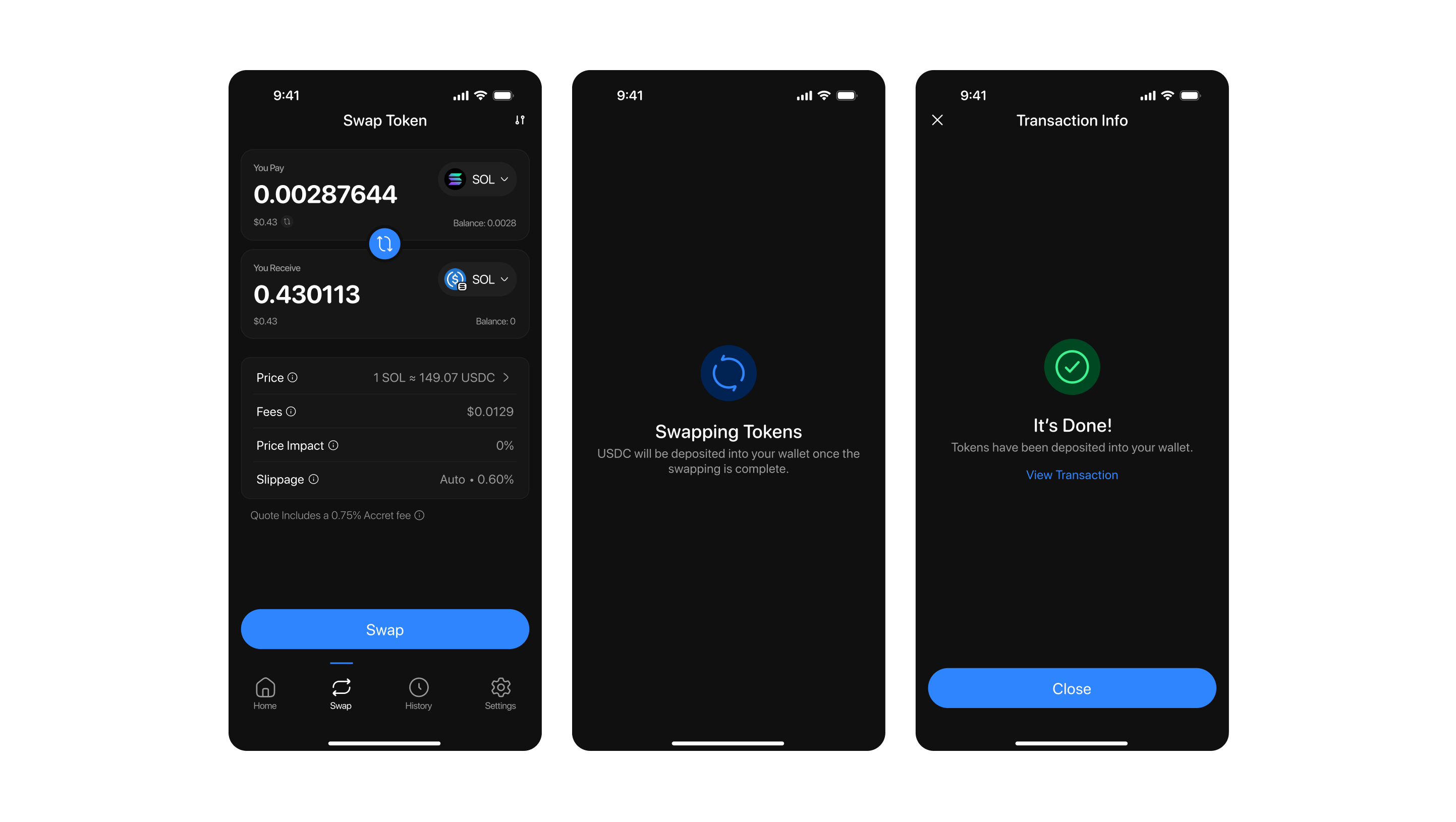
The interaction was designed around a familiar journey:
Select → Review → Swap → Processing → Result
Key interaction decisions included:
- Numeric keypad optimized for quick amount entry
- Quick percentage shortcuts for faster selections
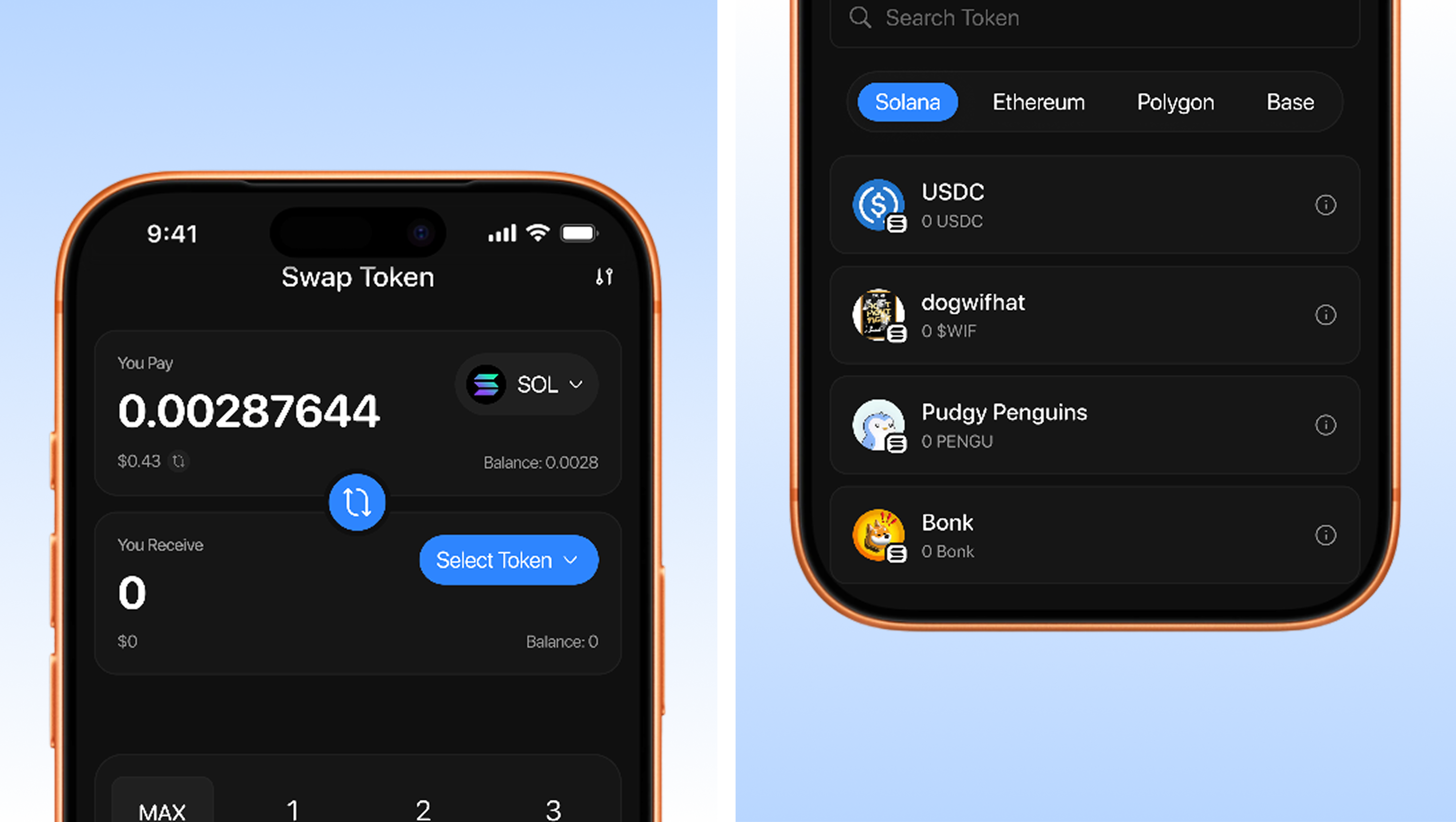
- Dedicated token selector with network filters
- Real-time swap preview and exchange values
- Transaction metadata including fees and price impact
- Progressive status indicators during execution
- Success and failure states with recovery paths
Design System
Building a scalable system for consistency across platforms and interactions
As the product evolved from individual screens into a larger ecosystem across mobile, App Clips, and cross-platform experiences, consistency became increasingly important.
Rather than designing interface elements screen by screen, the focus shifted toward creating a reusable system that could scale with the product while maintaining clarity and predictability.
The objective was simple: create a system that feels reliable enough for financial interactions.
Tech & Development
Built a mobile-first wallet experience around speed, interoperability, and frictionless transactions
Accret was designed as a consumer-first crypto wallet focused on reducing interaction complexity across cross-chain ecosystems.
While the product experience emphasized simplicity, the underlying implementation involved handling multiple systems, transaction flows, and wallet behaviors simultaneously.
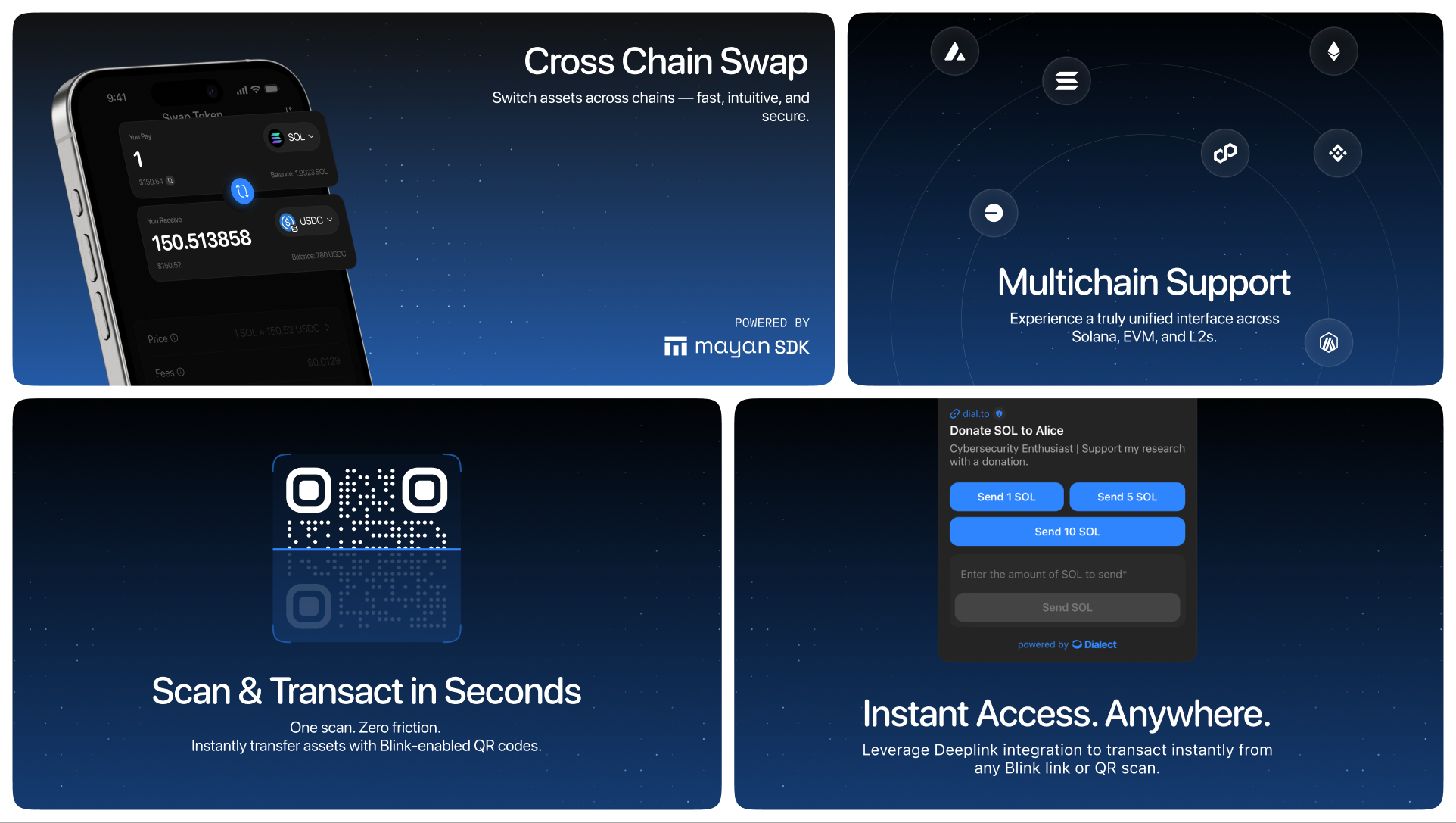
It was creating an experience where users could move across ecosystems, trigger actions instantly, and interact without navigating through multiple applications or unnecessary steps.
Core focus areas included:
- Cross-chain asset movement
- Deep-link and Blink execution
- Mobile-first interactions
- Transaction simplification
- Wallet-native Web3 actions
- Reduced interaction steps
The experience was designed around a simpler interaction model:
Tap → Execute → Complete
One of the earliest explorations of Accret started around Solana App Clip interactions and deep-link experiences. The underlying idea was simple: users should not manually navigate multiple interfaces to complete a transaction.
Instead, interactions could intelligently route into the wallet through:
- QR codes
- NFC interactions
- Shared links
- Social applications
- Blinks
Beyond the App
Extending the product identity beyond screens and interactions
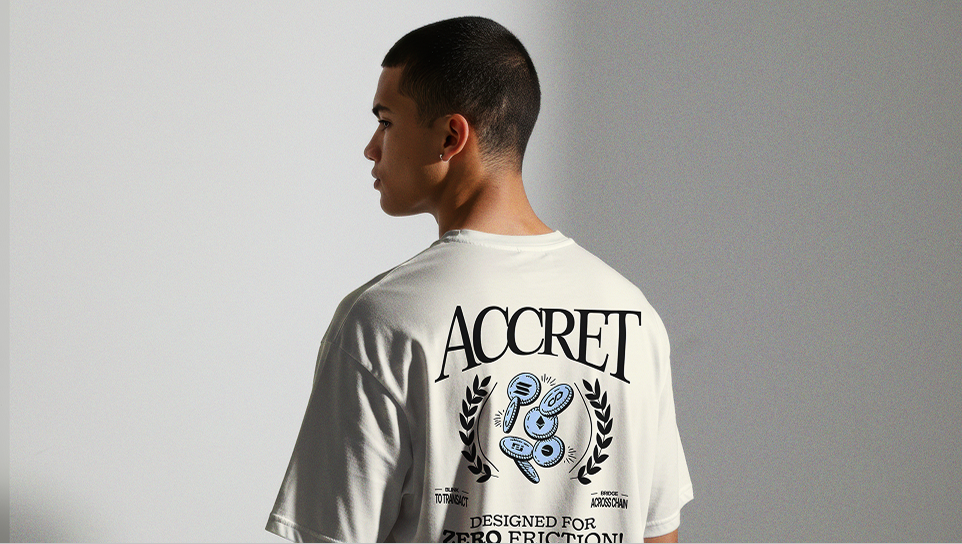
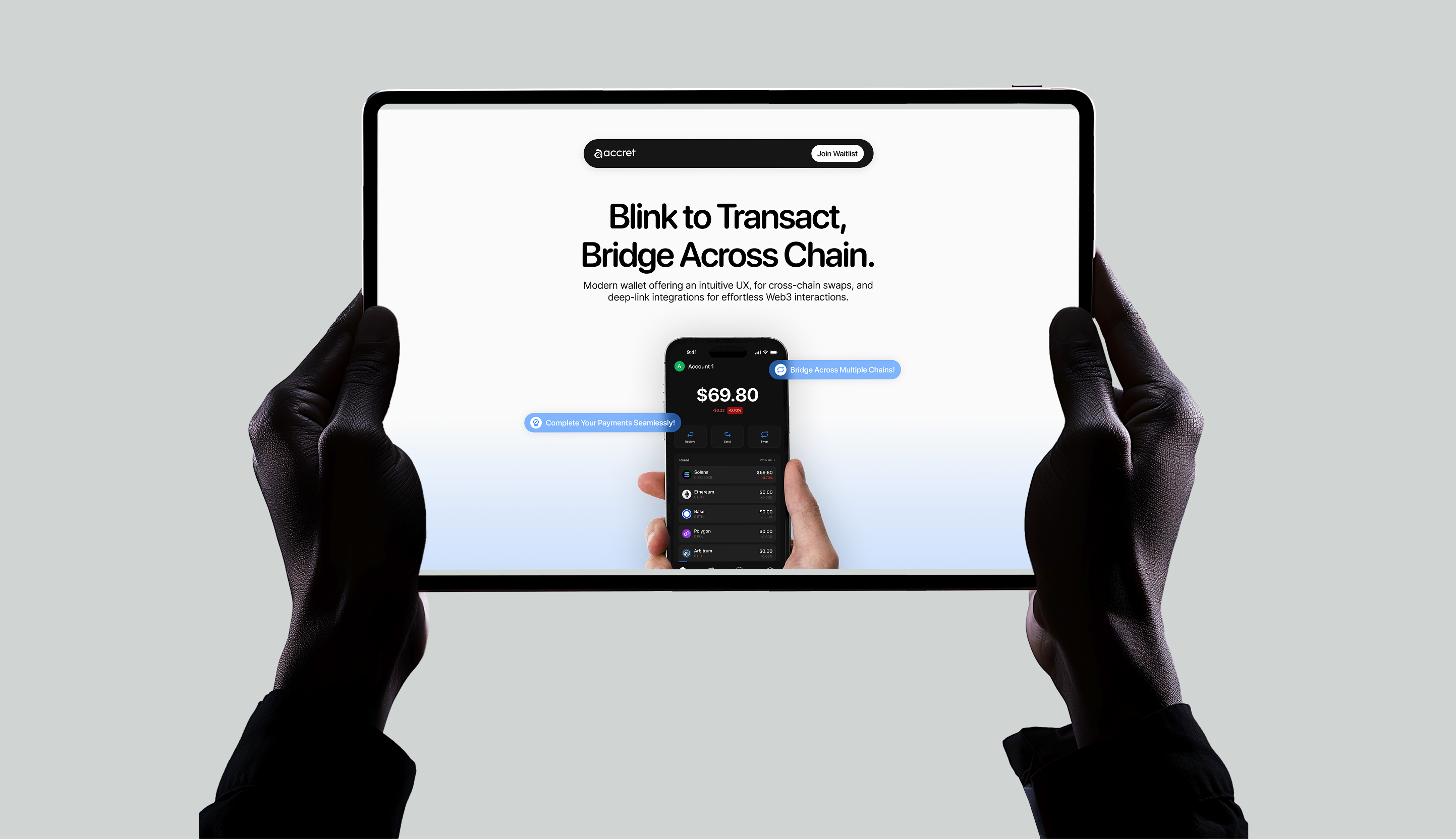
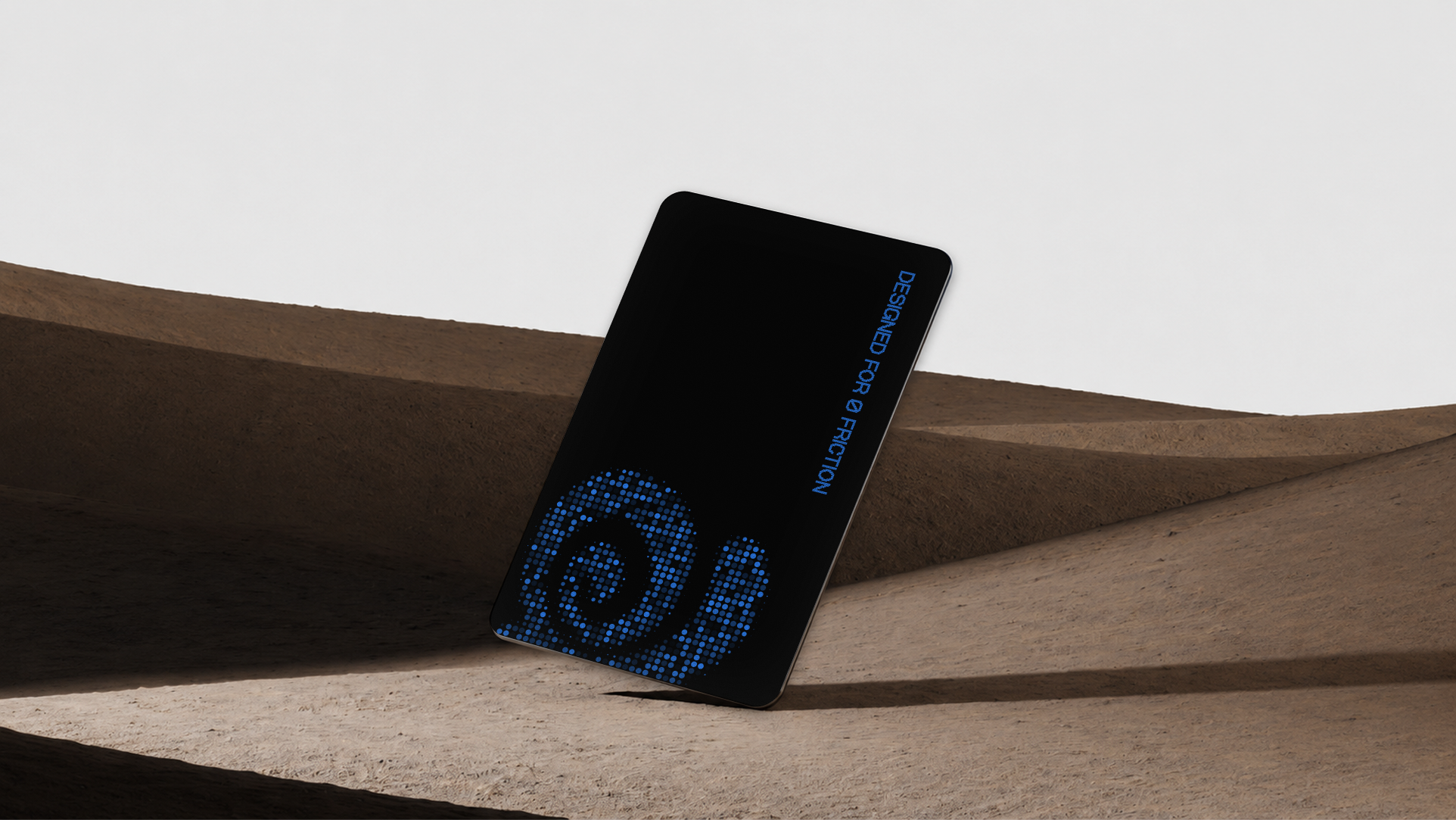
The goal was to build a recognizable ecosystem where every touchpoint, whether digital or physical, felt connected to the same product language. This expanded the design process beyond app screens into web experiences, and physical interactions.
Reflection & Learnings
What worked well, what we learned, and what we would improve further.
Building a wallet was easy. Simplifying crypto was the challenge we catered.
Over time, Accret became much more than a wallet interface. It became an experiment around reducing the distance between discovering an action and completing it.
Throughout the process, the team worked across product strategy, UX, branding, mobile interfaces, deep-link systems, visual identity, and implementation thinking.
From onboarding flows and swap experiences to website design, NFC interactions, and ecosystem assets, the project eventually expanded into a complete product ecosystem.
What we built:
- Mobile-first cross-chain wallet experience
- Deep-link and Blink execution workflows
- Solana-native and multi-chain interactions
- End-to-end UX and visual identity system
- Responsive website and communication assets
- NFC, merchandise, and ecosystem extensions
- A product that won a Wormhole side-track bounty at the Colosseum hackathon
One of the biggest observations was that users rarely care about chains, protocols, or SDKs. They care about completing actions quickly and confidently. That realization influenced almost every design decision throughout the project.
Let's Build Together
If you're building in a space where the business is complex, technical, or difficult to explain, that's where we play the game.We focus on turning businesses, processes, and dense ideas into structured, credible experiences that people can actually understand.
Request access to build your edge